
Azusa City Directory Collections
The collection map below separates the named local sources from regional fallbacks. It is tempting to fill a collection gap with a guessed Polk or reverse-directory year, but the Azusa research found no official public list of local publishers or exact annual runs. The honest starting point is a reference request to the library, followed by a search of the regional shelf that can confirm an actual volume.
| Collection | Years or span | Where held | Access and use |
|---|---|---|---|
| Azusa Herald historical newspaper | Other titles dating to 1887 are verified; exact run to confirm | Azusa City Library digital collection | Names, addresses, obituaries, clubs, notices |
| Federal census schedules | 1850-1950 public schedules | NARA, partner sites, libraries | Household, relationship, birthplace, occupation |
| LA County naturalization index | 1852-1915 | NARA Riverside, M1608 | Name index into Superior Court records |
| LA County naturalization records | 1852-1888, certificates 1876-1906, later declarations and petitions | NARA Riverside, M1614 | Origin, residence, witnesses, identity clues |
| Regional directories | LAPL reports U.S. city coverage from 1861-1960 and Los Angeles 1873-1942 | Los Angeles Public Library and LA County Library | Verify whether a volume includes Azusa |
| Sanborn fire-insurance maps | Azusa editions to confirm | Library of Congress and library databases | Building footprint, use, and physical context |
A directory entry becomes much stronger when its address and household clue match a census year or Azusa Herald item. The collection itself remains the source of the exact abbreviation and coverage claim.
Azusa's Newspaper Directory in Practice
The Azusa Herald acts like a narrative local source. Its local names appear in births, marriages, obituaries, school reports, businesses, civic clubs, sports, and legal notices. An address variant can bring up several kinds of evidence around one household, which is useful when an ordinary printed directory omits a renter or skips a year. Search the exact archive interface with spelling variants, then save the newspaper date, title, page, and the context of the mention.
The city’s official publication describes the library’s one-of-a-kind local newspaper collection as including the full Azusa Herald run and other titles dating to 1887. The current search interface and exact first and last Herald dates were not inspected, so do not convert that description into a made-up year range. Use the library reference desk to confirm the result.
The Azusa library access page explains the current reference setting.
Limited print access makes the telephone and virtual reference channels important when the search depends on an unlisted directory or clipping file.
Ask Azusa Library for City Directories
During the 2025-26 modernization, Azusa City Library operates at 340 W. Fifth Street. Print access is limited, but reference help remains available in person, by phone, and virtually. The main reference contact is (626) 812-5232 and Library_Staff@azusaca.gov. Ask staff to check city and telephone directories, school annuals, obituary clippings, vertical files, and the Azusa Herald archive rather than asking only for a “resident list.”
The library’s history explains why the shelf may be spread across formats. The Azusa Library Association was proposed on August 27, 1887, held its first regular meeting on January 2, 1888, moved books through a millinery store and the Brunjes Hotel, became the Azusa Free Library in 1902, received a $10,000 Carnegie grant in 1910, and reached a later building in 1959. Early local names may therefore sit with newspaper or community material instead of a formal city archive.
The official Azusa library history supplies that institutional chronology.
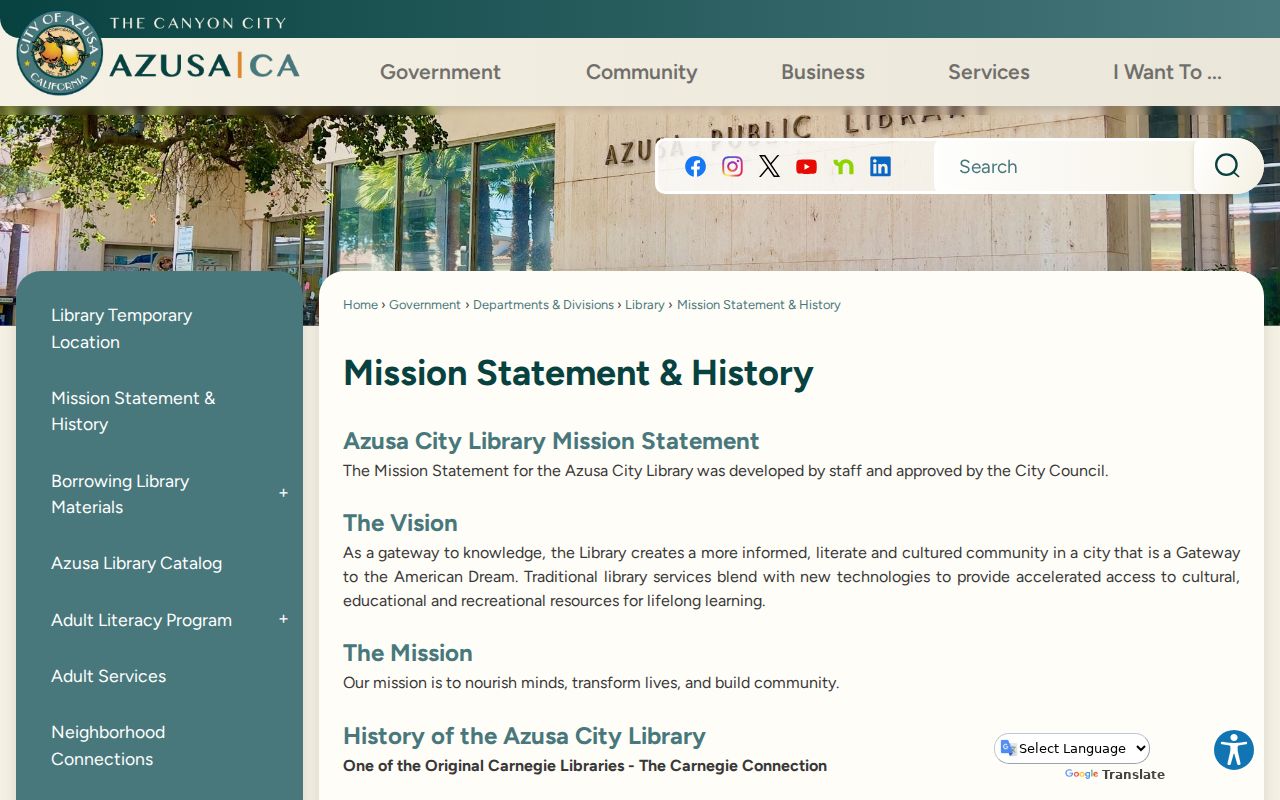
The renovation is a timely access fact, not a reason to abandon the historical trail.
Read an Azusa City Directory Entry
A verified directory entry may contain more than a name and address. The exact format depends on the publisher and issue, so use the volume’s own key before expanding an abbreviation. An alphabetical section can give a surname, given name, spouse in parentheses, occupation or employer, residence address, business address, widow notation, and a homeowner or renter mark if that publisher used one. A reverse section may put the street and house number first.
- Alphabetical entry
- Begins with a surname or given name and may connect the person to an address or work.
- Householder index
- A name-centered list of people treated as heads of household by the publisher’s rules.
- Reverse or criss-cross entry
- Starts with street and number, then may list an occupant or telephone clue.
- Abbreviation key
- The volume’s own guide to marks for spouse, occupation, removal, ownership, or other status.
- Removal mark
- A publisher’s notation that may signal a move, but needs a later source for confirmation.
Read the entry in context. An occupation is not a home address. A business address is not a residence. An owner or renter symbol is a publisher’s claim for that issue, not a current property record.
Reverse Azusa Directories Start with House Numbers
When the question is “who lived at this address,” a reverse city directory is often more useful than an alphabetical volume. Start with the street spelling, number, and direction. Check the surrounding entries because a street may be indexed under a shortened suffix or a different block convention. Then move to the alphabetical section to read the full name and any occupation or spouse note.
Exact Azusa reverse-directory years remain a research gap. Los Angeles Public Library reports more than 5,000 microfilm rolls covering U.S. cities from 1861-1960, earlier directories on microfiche, about 1,000 paper U.S. directories, and Los Angeles city directories from 1873-1942 in film or paper. LA County Library’s Californiana Collection at Norwalk reports nineteenth-century city directories and local histories, while HeritageQuest offers census and city-directory searching with a 13-digit library card for remote access.
Those regional shelves are useful fallbacks, not proof that each book includes Azusa. Preserve the collection name, issue year, page, and access point when a volume does.
Trace Azusa Directory Families by Year
To trace a household, begin with the newest verified city directory entry and move backward one issue at a time. Record the first and last appearance, address, spouse, occupation, and any change in surname or number. Pair each directory date with the nearest federal census through 1950. The census supplies relationships and birthplace fields that a city directory may omit, while the directory fills in years between census snapshots.
- Copy the full entry and the volume’s abbreviation key.
- Search the same name, spouse, and address in the next older issue.
- Compare the address with census household and relationship fields.
- Use deeds for ownership, permits and Sanborn maps for the building, and the Herald for events.
- Use obituary or probate records to test a death, inheritance, or final move.
An omission can mean a publication gap, nonresponse, a move, an address change, or an adult who was not treated as a householder. Do not turn a missing line into proof that a family left Azusa.
Naturalization Adds Azusa Resident Names
NARA Riverside supplies an unusual historical fallback when an Azusa city directory is missing. Its Los Angeles County naturalization index covers 1852-1915. Related records include Los Angeles County naturalizations from 1852-1888, certificates from 1876-1906, declarations from 1887-1915, and petitions from 1907-1915. Central District federal material extends through later twentieth-century index and petition runs.
A naturalization record can add origin, residence, witnesses, name changes, and court context, depending on the form. It is not a current resident directory. Use the index to identify a record, then read the record’s own date and address fields. NARA’s finding aid explains the collection structure and helps separate county Superior Court material from federal Central District material.
Open the NARA Riverside naturalization finding aid before citing a name.
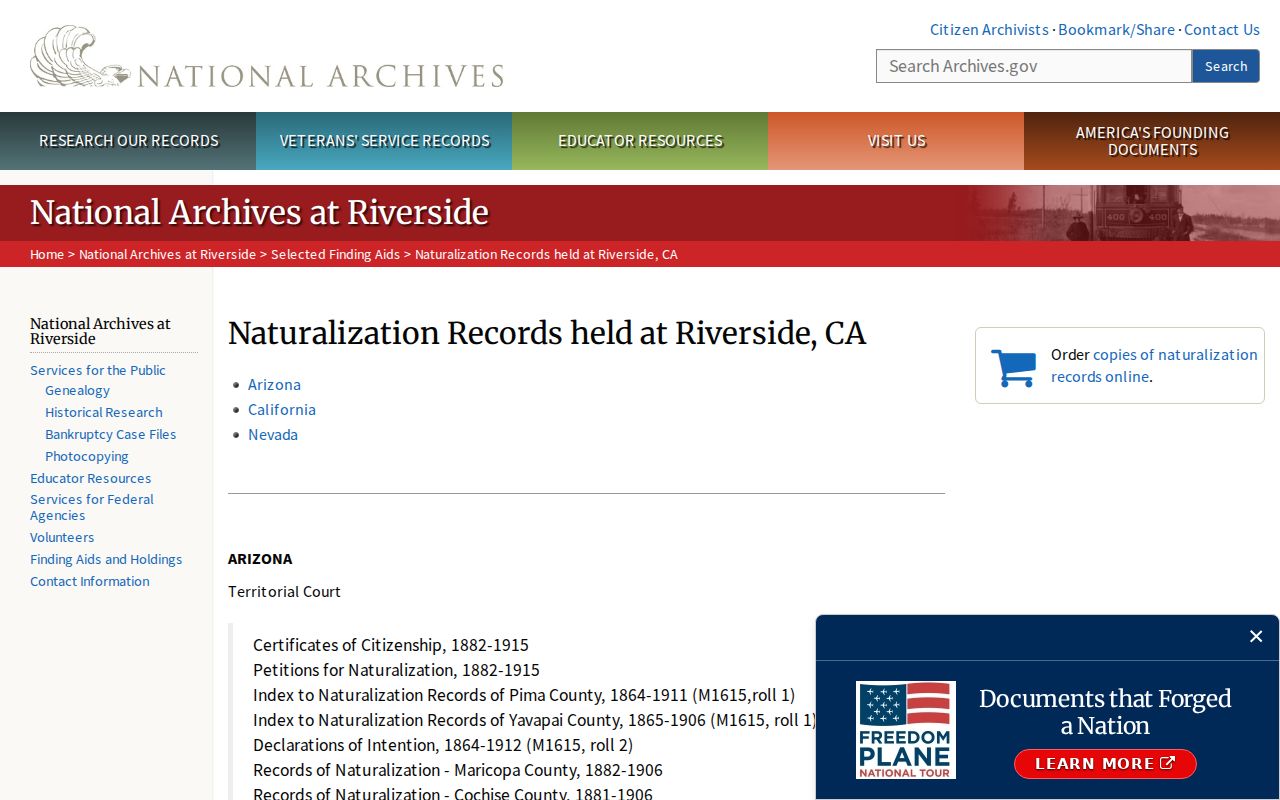
The naturalization index can bridge a nineteenth-century name gap while keeping the court and year attached to the clue.
Sanborn Maps Add Azusa Property Records
Sanborn fire-insurance maps add the physical layer that names alone cannot provide. They can show a building footprint, construction material, use, and nearby features when an Azusa edition exists. The Library of Congress search guide says to search by state and place, then inspect the catalog record and map sheets. The exact Azusa editions were not located in the official sweep, so the map date must be confirmed before it supports a house-history claim.
Pair a Sanborn sheet with an address, parcel map, deed legal description, permit, or newspaper item. A footprint can explain why a directory lists a business or family at a location, but it does not identify every occupant. The Library of Congress Sanborn search guide is the right place to start.
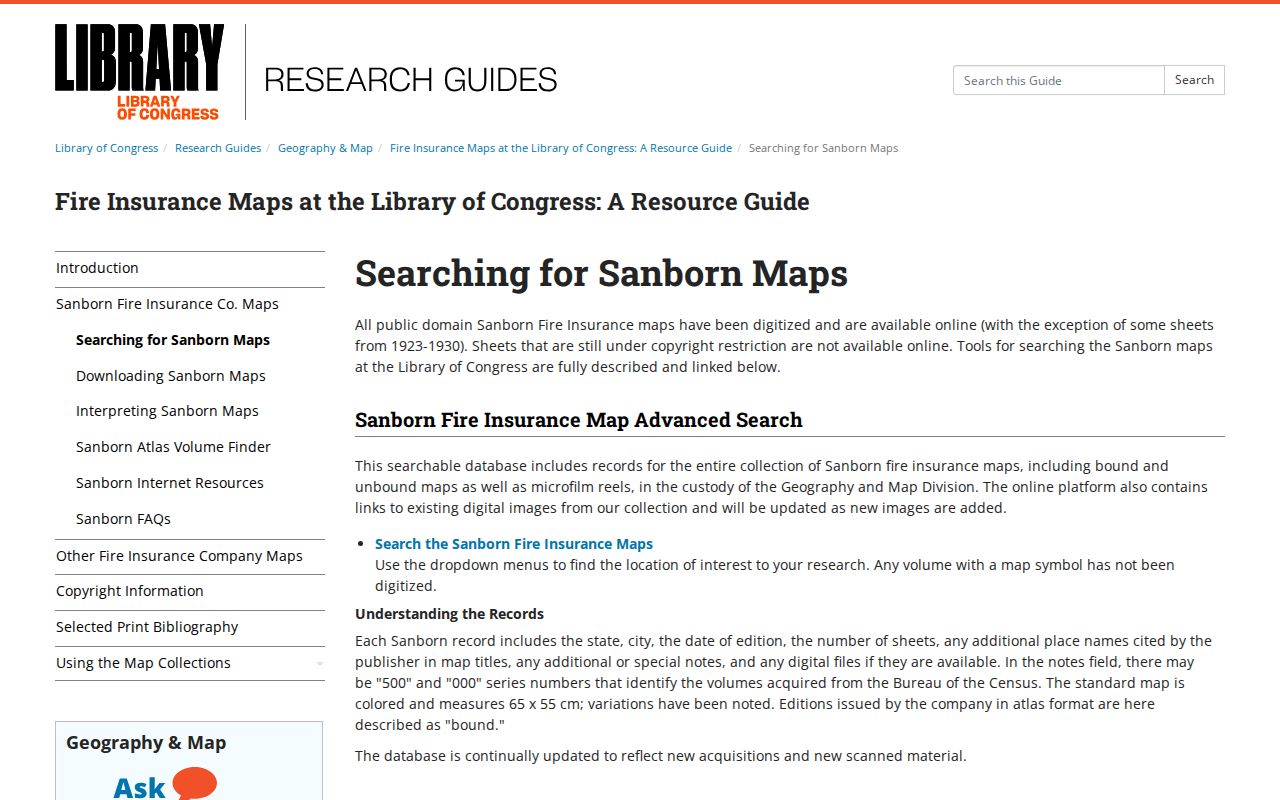
Map context is most useful when the directory address and the parcel description point to the same physical place.
Test Missing Azusa Directory Entries
A missing city directory entry is not a clean negative. A publisher may have skipped an issue, missed a household, changed the street form, or listed only a head of household. A person may have moved, died, lived with another family, or appeared under a compound or anglicized surname. Test the gap against the Azusa Herald, census, deed, permit, obituary, probate, school annual, and naturalization sources.
Keep city directory evidence in its historical lane. It can show that a name and address appeared together at a time. It cannot certify a current address, turn an owner into an occupant, or replace a restricted vital or voter record. If the question becomes current and person-specific, the Azusa resident lookup route supplies the modern verification steps.
The strongest family-history result is a chain with a volume title, year, page, archive or library location, and a second source that explains the same household without stretching the evidence.