
What an Azusa Resident Lookup Covers
A resident lookup is a sequence of checks, not one master search. The record type should be chosen from the clue at hand. An address points to parcel data. A case question points to the court. A family-history question points to vital, census, newspaper, naturalization, obituary, or probate material. A public professional connection points to a license or entity filing.
| Record | What it confirms | Where | Access |
|---|---|---|---|
| Assessor and parcel | Situs, AIN, property facts | Los Angeles County Assessor | Free address or AIN web search |
| Voter status | One voter’s registration status | LA County Elections | Last name, birthdate, house number, ZIP |
| Court case | Name variant, role, filing date, case number | Los Angeles Superior Court | Paid name or defendant search |
| Vital record | Event identity and family links | RR/CC, local registrar, CDPH | Informational, authorized, or restricted |
| Business or license | Entity, agent, credential, status | California and city systems | Official public indexes |
| Historical source | Past household or community context | Library, NARA, newspaper, census | Collection-specific access |
The table keeps a resident lookup grounded. A court record can confirm a case role, while an assessor result can confirm the parcel. Neither alone proves that a person currently lives in Azusa.
Choose an Azusa Resident Record
Start with the strongest independent identifier. A full name plus a known middle name is better than a name plus city. A name plus a spouse, business, filing location, or approximate date is better still. If the clue is an address, resolve the AIN through the Los Angeles County Assessor Portal, then decide whether the question concerns an owner, a deed party, a permit participant, or a historical occupant.
For a known court matter, use the case number route instead of paying for a broad name search. For a family-history question, check the Azusa Herald and census before seeking a modern certificate. For a public business connection, compare California bizfile with a fictitious-business-name filing or license record. The aim is not to collect many weak hits. It is to find two sources that agree on a specific person and date.
- Index
- A finding aid that points to a record; it may not include the full document.
- Image
- A scan or copy of the underlying record, subject to access and redaction rules.
- Certified copy
- A copy issued by the custodian with a formal certification, often under a separate eligibility rule.
- Same-name trap
- A match that shares a name but lacks the date, role, parcel, or family link needed to identify the right person.
Pay for an Azusa Resident Court Search
Los Angeles Superior Court separates “Search for Case by Name” from “Search for Case by Defendant Name.” Civil, limited civil, small claims, family law, and probate use the party search. Criminal matters use the defendant search. Document images are a separate service, and remote access is limited for criminal, family, juvenile, adoption, sealed, and other protected matters.
| Field or control | Use in an Azusa resident lookup |
|---|---|
| Service choice | Pick party name, defendant name, or document images. |
| Name | Test spelling, order, initials, and former names. |
| Case type | Separate civil, small claims, family, probate, and criminal categories. |
| Filing date or location | Split namesakes and confirm the proper courthouse or venue. |
| Guest or account | Guest card payment is available through the court service; save the result promptly. |
The court charges for a name search even when no match appears. Search results remain available for about 24 hours, while purchased documents remain available for 30 days; save case numbers, dates, and document details when the result is open.
The Los Angeles Superior Court online-services screen shows the separate case-search paths.
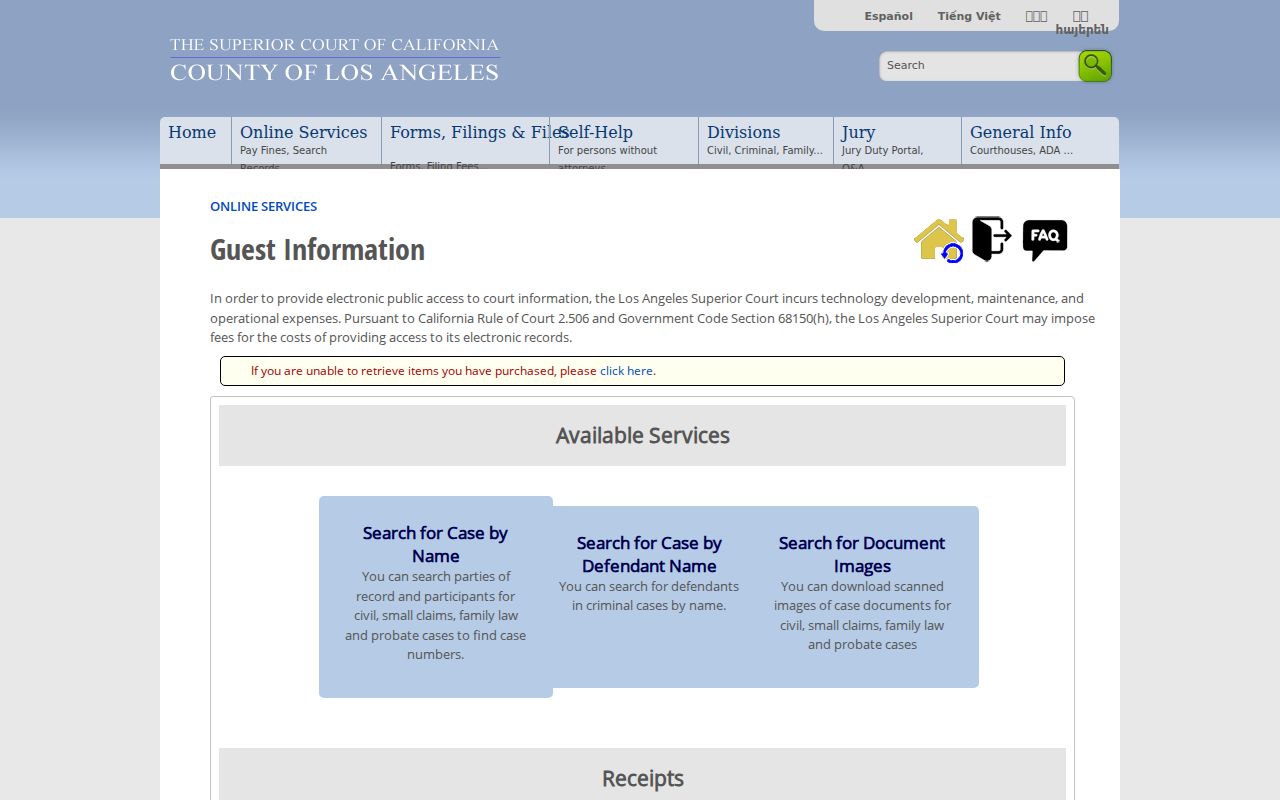
A court hit is most useful when the case category, filing place, and participant role match the person clue.
Split Azusa Resident Namesakes
Same-name cases are common in a large county. Build a small identity key before deciding that two records belong together. Compare middle names, dates, spouse or parent names, occupation, business affiliation, parcel legal description, filing location, and the address as it appeared at that time. A name, city, and broad age are not enough.
A court result can show participant name, case type, filing date, location, case number, hearings, disposition, and available image count. A business filing can show entity number, status, jurisdiction, agent, street or mailing address, and filing history. A deed index can show party role and legal description. Write the field names down, since “address” can mean a situs, mailing, service, or notice address.
- Record the exact spelling and role used by the custodian.
- Compare the date range with the person’s known life or business history.
- Use a second office to test the parcel, family, or filing link.
- Keep a no-match separate from a sealed or unavailable result.
That process keeps an Azusa resident lookup from turning an index similarity into a personal claim.
Use an Azusa Resident Lookup for Probate
Probate is a useful official trail when the goal is family history or an estate matter. Los Angeles Superior Court probate records can identify a petitioner, decedent, heirs, notices, and addresses in the public parts of a file. Search the probate case category by name, save the case number, and read the register of actions before paying for an image. A probate name can be a lead to a family link, not proof that an heir lives at a listed address today.
Obituaries and the Azusa Herald can supply the family language that a court index lacks. Compare the newspaper date and relationship with the petition, death record, or estate filing. If the record is sealed, confidential, or not in the online coverage, ask the clerk or archive identified for that case. The custodian, not a copied summary, controls what can be certified.
For older family trails, pair probate with census schedules, naturalization material at NARA Riverside, and local directory evidence. The Azusa city directory collections route explains how to read the household layer without treating an old address as a current one.
Use an Azusa Resident Lookup for Adoption
An adoption or birth-parent question needs the official California process, not a public-record shortcut. Modern birth records can be available as informational copies, while authorized copies require a statutory relationship, sworn statement, and sometimes notarization. Original amended or sealed records and adoption files have separate court and agency rules. The CDPH Vital Records forms identify the event, applicant, relationship, copy type, signature, and payment steps.
For a birth event, the county or local registrar may handle current records, while CDPH maintains statewide records and historical material begins with different sources. The CDPH custodian guide explains the county, local registrar, recorder, and court roles. California birth records at the state level begin in July 1905. Earlier facts may come from county registers, churches, cemeteries, newspapers, or family-history collections. A certified informational copy is marked as not valid to establish identity, so its purpose should not be overstated.
The California vital-record application page supplies the official forms. Current 2026 fees include birth $31, death $26, marriage $19, and divorce certificate $18; the CDPH fee page should be checked before mailing.
Check an Azusa Resident's Business Records
A public business or professional lookup can separate two people with the same name, but it does not become a home address search. California bizfile Online searches an entity by name or file number and can show status, jurisdiction, street or mailing addresses, agent, due dates, and filing history. DCA’s license search can show a licensee, number, type, status, dates, and discipline links for participating boards.
Cross-check a formal entity with a county fictitious-business-name record or Azusa business-license record. A DBA is not a corporation. An agent for service is not necessarily an owner or resident. A permit applicant or professional license address may be a work or service location. Record that distinction in the lookup notes.
The California Department of Consumer Affairs search shows how a credential clue can support identity verification.
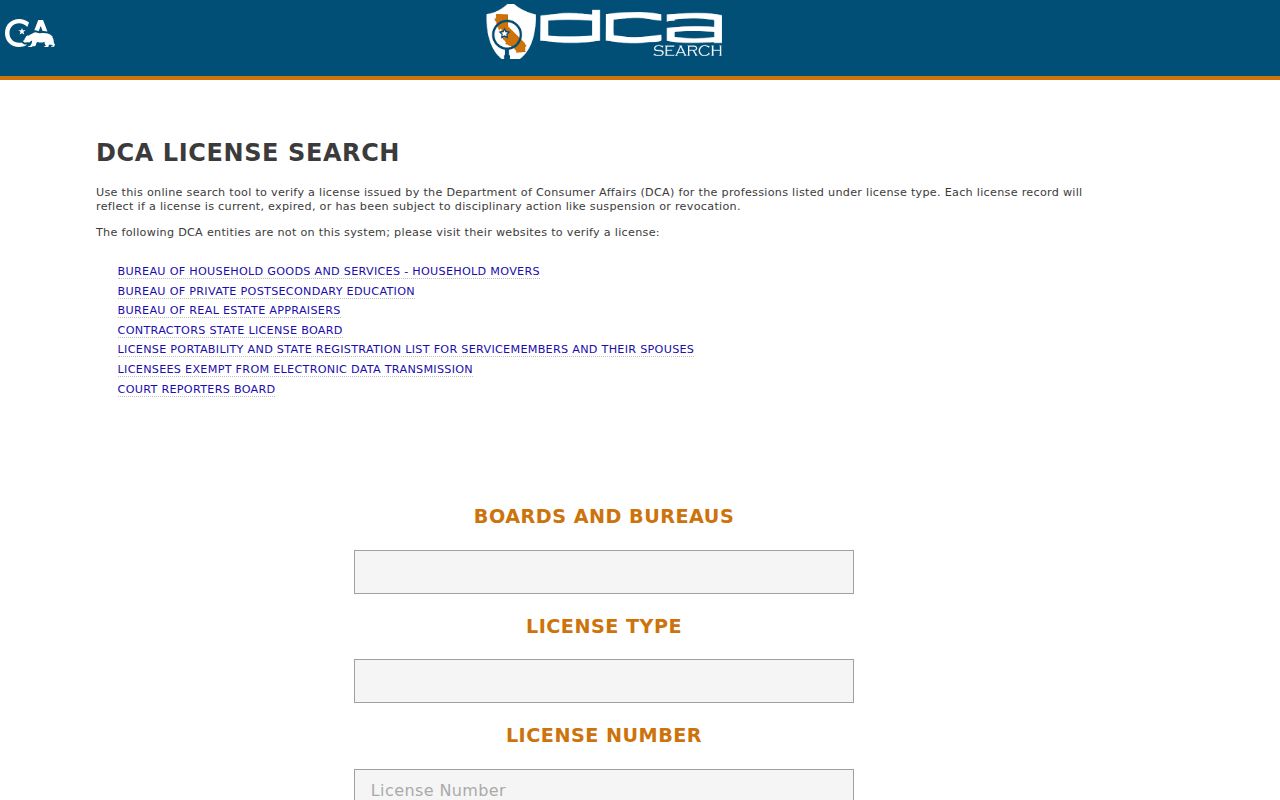
A license result can add a stable number or date to an Azusa name match, while the actual residence question still needs a proper record.
Azusa Resident Voter Data Limits
The LA County voter-status lookup is for a voter’s own verification. It requires last name, birthdate, house number, and ZIP Code. It is not a public surname search and it cannot be used to browse an Azusa street. Broader file orders use the county voter-file request route. Full voter-file access is limited under Elections Code section 2194 to election, scholarly, journalistic, political, or governmental purposes, with application and contract controls.
Permitted voter-file fields can include name, residence and mailing address, date of birth, party, status and date, precinct, language preference, phone or email where recorded, registration method, and participation history. The California voter-access rules explain permitted and impermissible uses. The file does not disclose ballot choices and excludes driver-license or ID numbers, the last four Social Security digits, unique identifiers, and signature images. Safe at Home can shield qualifying residents through a substitute mailing address.
The captured LA County voter-status screen shows the four-field self-check route.
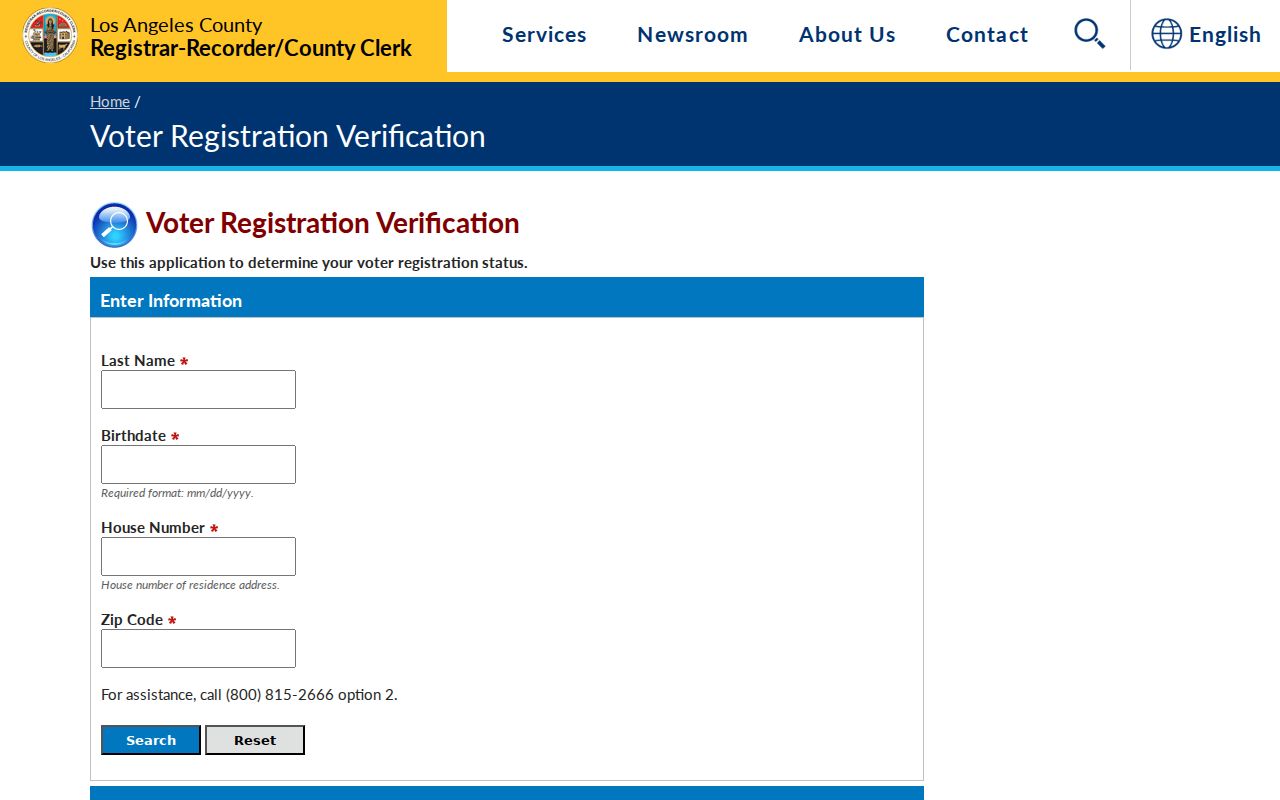
A failed status result may reflect missing facts, inactive status, or a protected record. It does not by itself establish that someone left Azusa.
Azusa Resident Lookup Limits
If a result is wrong, ask the office that created it. A focused California Public Records Act request can seek an existing city or county record by type, date span, department, address, and name variant. CPRA generally calls for a determination within ten days, with a possible fourteen-day unusual-circumstances extension. It does not override vital, voter, juvenile, sealed, Safe at Home, DMV, or investigative confidentiality.
The City Clerk is the contact for many Azusa municipal records, while the county routes property, court, election, and vital questions to separate custodians. Los Angeles County warns that it has no centralized recordkeeping system. If the online search has no result, use the counter, mail, phone, archive, or request channel documented for that record rather than treating the empty screen as a final answer.
Lawful use. A resident lookup is for personal, lawful research, family history, reconnecting, and civic understanding. Do not use a name or address trail to stalk, harass, intimidate, or harm anyone.
Save the custodian, URL, record number, result date, and limits. That evidence trail makes a correction request clearer and keeps an Azusa resident lookup tied to the source rather than to a copied profile.
Ask for Missing Azusa Records
Some records are not online by design. The recorder index is counter-only. Court images may require a clerk or archive visit. Vital copies need the right form and eligibility. Library print holdings may need a reference call during the renovation. A narrow request should state the record type, known names, date range, address or parcel clue, and preferred format.
That fallback chain is part of an accurate resident lookup. Online tools are useful first stops, but a custodian’s counter, phone line, mail form, library shelf, archive finding aid, or CPRA route may hold the next link. Keep every answer marked as a clue, a record, or a certified copy so the final identity check does not outrun the evidence.